

Transformer and inductor manufacturing in India runs on volume and tight quality gates. The magnetics inside switch-mode power supplies, EV on-board chargers, telecom and networking equipment, industrial drives, and LED drivers all have to pass electrical-parameter checks and safety-compliance checks before they ship. As designs push toward higher frequencies and finer enamelled wire, the failures that slip through get harder to catch — and a single missed turn-to-turn short can mean a field return, a warranty claim, or a safety recall.
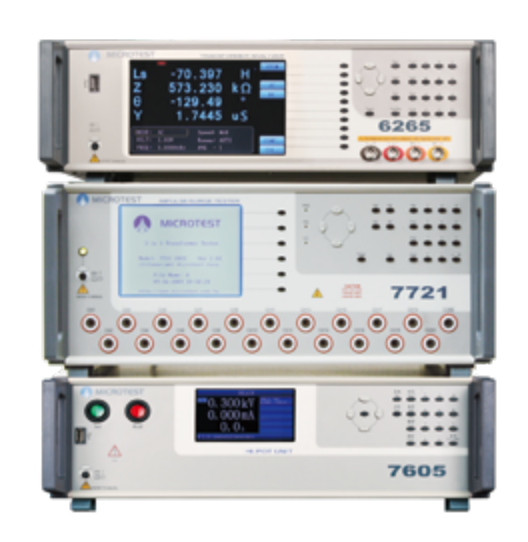
The Microtest 3-in-1 Transformer Testing System (6265 + 7721 + 7605) answers this by folding three normally-separate test benches — low-voltage electrical characterisation, dielectric (hipot) safety testing, and impulse winding testing — into one 20-channel station that runs the full sequence in a single insertion. This article walks through what the integrated setup measures, and crucially why each added layer exists: why hipot is non-negotiable, and why the impulse winding test catches defects that nothing else on the line can find.
Why One Station Beats Three Benches
On a traditional line, a transformer is handled three times: once at an LCR/turns-ratio bench, once at a hipot station, and once at an impulse tester. Every extra handling step adds cycle time, re-fixturing, operator error, traceability gaps, and floor space — and it makes it far too easy for a unit to skip a station entirely.
The 3-in-1 consolidates all of it. The operator inserts the transformer once, and the system executes low-voltage measurements, AC/DC withstand, insulation resistance, and the impulse winding comparison as one automated routine across up to 20 channels, at up to 30 test items per second. One fixture, one pass/fail verdict, one record. Microtest calls this the One-Step Transformer Test System, and on a production line that translates directly into lower cost per unit and a test record that can’t be partially skipped.
The Three Test Layers Inside the 3-in-1 — and Why Each Exists
The whole point of the 3-in-1 is that the three layers are complementary, not redundant. Each one sees a class of defect the others are blind to.
Layer 1 — Low-Voltage Electrical Characterisation (6265)
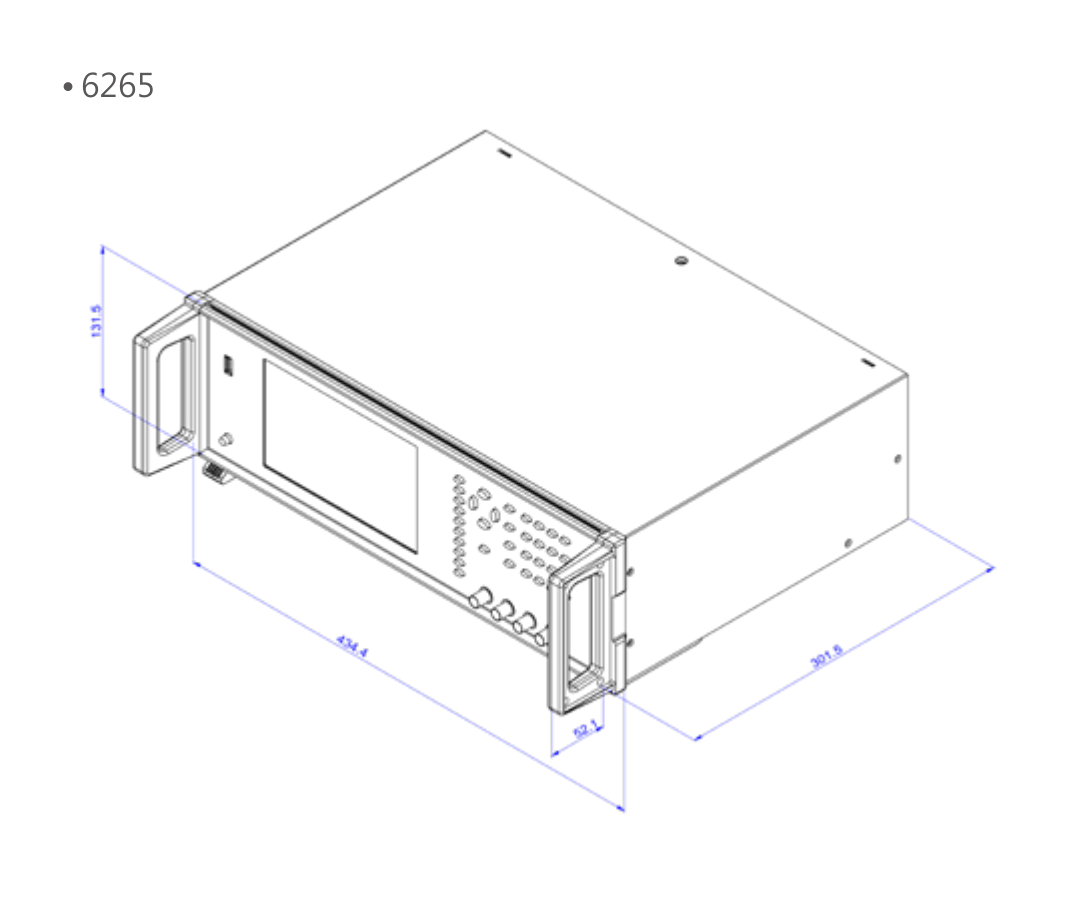
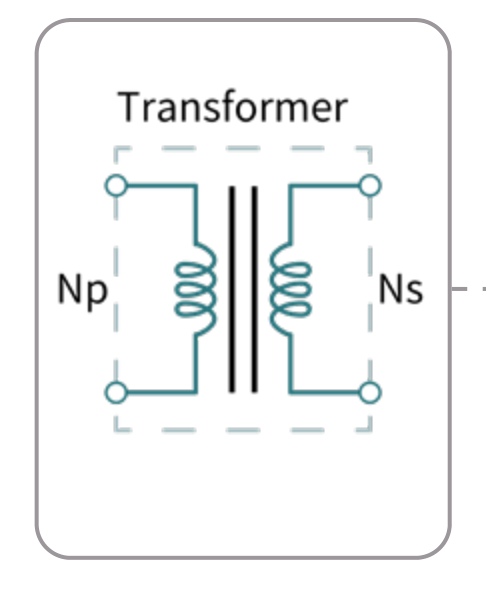
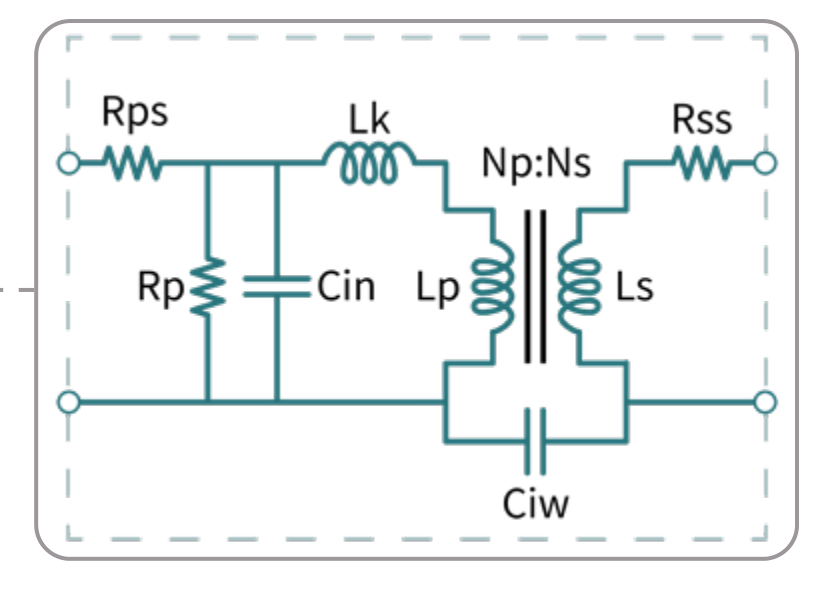
The 6265 transformer tester verifies that the transformer was wound and assembled to its design. Across a 10 Hz–200 kHz sweep (500 kHz on the 6266, 1 MHz on the 6267) it measures inductance (L), leakage inductance (Lk), turns ratio, DC resistance (DCR), AC resistance, quality factor (Q), impedance phase angle (θ), inter-winding capacitance, and pin-to-pin short circuits across up to 12 pin pairs.
These parameters confirm the right number of turns, correct wire gauge, proper bobbin placement, and a correctly sized core air-gap. What low-voltage testing cannot do is prove the insulation will survive high-voltage stress — and that is exactly why the next two layers exist.
Layer 2 — Why Hipot Testing Is Non-Negotiable (7605)
A transformer can pass every low-voltage parameter and still be dangerous. Low-voltage tests characterise the windings; they do not stress the insulation barrier between primary and secondary, or between windings and the core. In the field that barrier faces mains transients, switching surges, and lightning-induced spikes. If it can’t hold them off, you get breakdown — arcing, fire, or a live secondary.
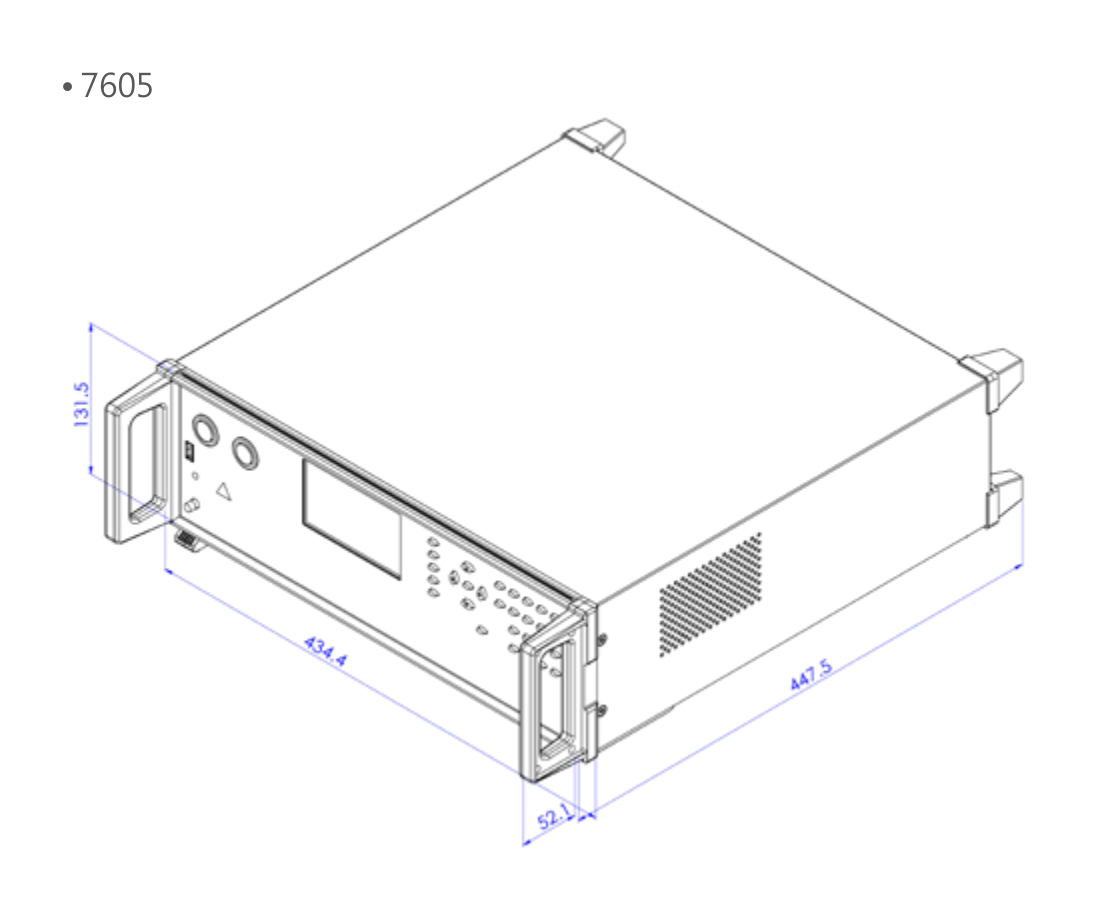
The 7605 hipot tester proves the insulation has margin by deliberately stressing it:
- AC withstand voltage up to 5000 V and DC withstand up to 6000 V, applied across the isolation barriers to confirm the dielectric won’t break down under high-voltage stress.
- Insulation resistance up to 12000 MΩ (test voltage to 1000 V) to confirm the insulation system — material and thickness — performs as designed.
- Arc detection on both AC and DC, to catch intermittent or partial breakdown that a simple leakage-current threshold would miss.
In short: hipot is what lets you sign off that the part meets safety-compliance standards. It is the difference between “the transformer works on the bench” and “the transformer is safe in a customer’s product.”
Layer 3 — Why the Impulse Winding Test Catches What Hipot Misses (7721)
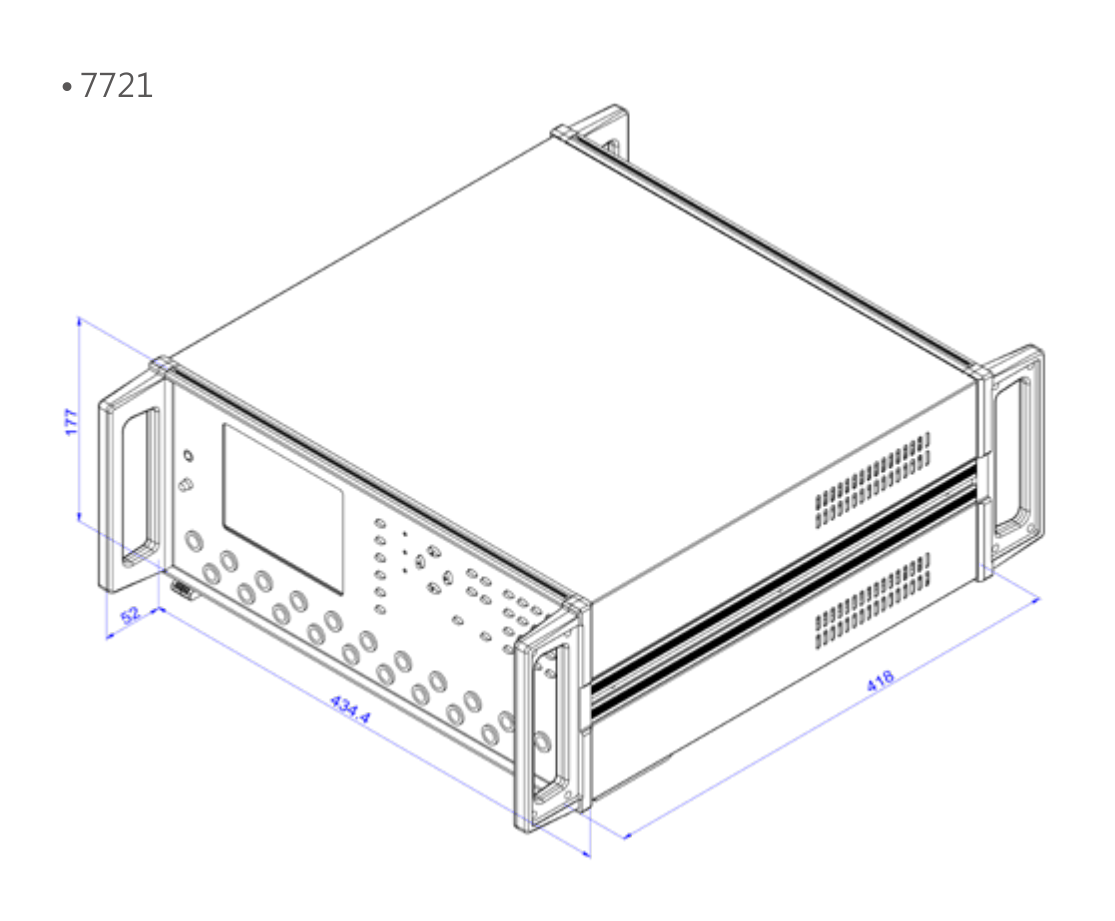
Here is the gap that justifies the third instrument. Hipot proves the insulation between separate windings (primary vs. secondary) and to the core. It does not reliably reveal a short between adjacent turns or layers within the same winding.
Modern transformers are wound with ultra-fine enamelled wire and a high turn count. If the wire has a tiny nick in its enamel, or the insulation is marginally damaged during winding, the result often isn’t a dead short — it’s a latent defect. The unit can pass low-voltage tests (the inductance shift is too small to flag) and pass hipot (the primary-to-secondary barrier is intact). Then, in service, repeated high-voltage cycling turns that weak spot into arcing, then localised heating, then a turn-to-turn short and failure.
The 7721 impulse winding tester is the only practical production test for these inter-turn and interlayer faults. It works non-destructively:
- It injects a fast, programmable high-voltage pulse (200 V to 5000 V) into the winding.
- The winding’s own inductance and capacitance form an L/C resonant circuit, producing a characteristic damped oscillation (ringing) waveform.
- A healthy winding rings at a predictable frequency and decay rate. A turn-to-turn short lowers the effective inductance and increases damping, so the waveform visibly shifts.
- The system compares each part’s waveform against a known-good “golden sample” using five comparison modes — AREA, DIFF, WAVEFORM, FLUTTER, and CORONA — quantifying the deviation and flagging both hard shorts and subtle insulation weakness (including corona / partial discharge).
That CORONA mode is the quiet hero: it surfaces partial-discharge behaviour that signals insulation that will fail later, long before it becomes a measurable short. Adding the 7721 is what moves a line from “rejecting parts that are already broken” to “catching parts that are about to break.”
Parameters Measured
| Test | What It Verifies | Why It Matters |
|---|---|---|
| Turns Ratio | Correct primary/secondary turn count | Wrong output voltage if off |
| Inductance (L) | Core material, turns, assembly | Affects energy storage & regulation |
| Leakage Inductance (Lk) | Winding position & air-gap geometry | Drives switching loss & voltage spikes |
| DC Resistance (DCR) | Wire gauge & solder joints | Copper loss & heating |
| Q & Phase Angle (θ) | Magnetic material quality | Efficiency & design conformance |
| Inter-winding Capacitance | Insulation thickness & coupling | EMI & high-frequency behaviour |
| Pin Short | No unintended pin-to-pin contact | Assembly & bobbin defects |
| AC/DC Withstand (Hipot) | Dielectric strength of isolation | Safety — no breakdown under stress |
| Insulation Resistance | Insulation system adequacy | Safety compliance |
| Impulse Winding | Turn-to-turn & interlayer integrity | Catches latent shorts hipot misses |
A Single Automated Test Sequence
On the 3-in-1, all of the above runs as one programmed routine after a single insertion:
- Operator places the transformer in the fixture and triggers the cycle.
- Low-voltage scan: L, Lk, DCR, turns ratio, Q, θ, capacitance across all channels.
- Pin-short check across the pin matrix.
- AC and/or DC withstand voltage applied across the isolation barriers, with arc detection.
- Insulation-resistance measurement.
- Impulse pulse injected; the resulting waveform is captured.
- Waveform compared to the golden sample (AREA / DIFF / WAVEFORM / FLUTTER / CORONA).
- Combined pass/fail verdict displayed and logged; results exported via PC Link software.
Because the sequence is fixed in the test program, every unit gets every test in the same order — no station-skipping, full traceability.
Specifications at a Glance
| Specification | 3-in-1 (6265 + 7721 + 7605) |
|---|---|
| Channels | 20 |
| LCR frequency range | 10 Hz–200 kHz (6265) / 500 kHz (6266) / 1 MHz (6267) |
| AC withstand voltage | 10 V–5000 V |
| DC withstand voltage | 10 V–6000 V |
| Insulation resistance | 1–12000 MΩ |
| Impulse voltage (programmable) | 200 V–5000 V |
| Impulse comparison modes | AREA, DIFF, WAVEFORM, FLUTTER, CORONA |
| Test throughput | Up to 30 test items / second |
| Data & control | PC Link software, RS-232, Remote, Printer |
| Typical applications | Electronic, power, communication & networking transformers |
3-in-1 vs 2-in-1: When You Need the Impulse Winding Tester
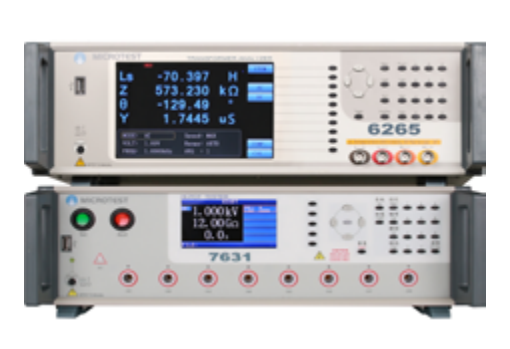
The 2-in-1 system (6265 + 7631) gives you low-voltage characterisation plus hipot — the right choice for simpler magnetics where the main risks are wrong parameters and barrier insulation. Step up to the 3-in-1 when your product has any of these traits:
- High turn counts on fine wire — flyback transformers, gate-drive transformers, high-frequency SMPS magnetics — where turn-to-turn shorts are a real failure mode.
- Safety-critical or high-reliability applications — automotive, medical, telecom, aerospace — where latent insulation defects must be screened out before shipment.
- Field-return or reliability pressure, where you need to catch parts that are about to fail, not just parts that already have.
If turn-to-turn integrity matters to your application, the impulse winding tester isn’t optional — and the 3-in-1 is the most economical way to add it without a third bench.
Why Buy from Instru India
Instru India (INSTRUINDIA TECHSYS LLP) supplies Microtest transformer test systems alongside a full range of test & measurement instruments across India. We help you choose the right 3-in-1 configuration for your product — the 200 kHz, 500 kHz or 1 MHz LCR option — and back it with product demos, genuine instruments, and responsive after-sales support, shipped nationwide from our New Delhi base.
Talk to us about the Microtest 3-in-1 system. Call +91 98711 19582 or request a quote, and we’ll help you spec the right configuration for your transformers.
Frequently Asked Questions
What is the difference between a hipot test and an impulse winding test?
A hipot test applies a high AC or DC voltage across the insulation between separate windings and to the core to prove dielectric strength. An impulse winding test injects a fast high-voltage pulse into a single winding and analyses the resulting ringing waveform to detect shorts between adjacent turns or layers. Hipot checks barrier insulation; the impulse test checks intra-winding integrity. They detect different faults, which is why the 3-in-1 includes both.
Why can’t low-voltage testing detect a turn-to-turn short?
A short between a few adjacent turns changes the winding’s inductance only slightly — often within normal production tolerance — so a low-voltage LCR measurement won’t reliably flag it. The defect only reveals itself under high-voltage stress, which is what the impulse pulse provides.
What does the Microtest 3-in-1 system consist of?
It combines the 6265 transformer tester (low-voltage electrical characterisation), the 7605 hipot tester (AC/DC withstand and insulation resistance), and the 7721 impulse winding tester, operating together across 20 channels as one automated station.
What types of transformers can the 3-in-1 test?
Electronic transformers, power transformers, communication transformers, and networking transformers — essentially any wound magnetic component where electrical parameters, dielectric safety, and turn-to-turn integrity all need verification.
Can the 3-in-1 system be integrated into an automated production line?
Yes. It supports up to 20 channels, runs the full test sequence in one insertion, and connects via RS-232, remote, and PC Link software for automated control and data logging. Instru India supplies the Microtest 3-in-1 system with configuration guidance and support across India.